
Posted March 16, 2009

Guards Need to Step Up for U
Former Gophers coach Jim Dutcher describes Tubby Smith’s team as “solid” most of the year and predicts guard play will be factor No. 1 determining success in the NCAA tournament. Minnesota plays its opening game Thursday night in Greensboro, North Carolina against Texas.
“Consistent guard play is really, really key. …The big men I think have come along a little bit,” Dutcher said on Friday. “(Ralph) Sampson particularly has come along. (Colton) Iverson is starting to play a little bit better. … They’ve got to get consistent guard play.”
Consistent inconsistency has been a problem throughout the winter for the Gophers, while front court freshmen center-forwards Sampson and Iverson have been adjusting to the Big Ten Conference. Minnesota ranked next to last among Big Ten teams in total turnovers, and sixth in assists. Not all of that is the responsibility of the guards but much is.
The guard group also struggled with shooting three pointers. The three point field goal percentages for Lawrence Westbrook, Al Nolen, Blake Hoffarber and Devoe Joseph are .353, .294, .341 and .383. Nolen and Hoffarber have had particularly disappointing seasons shooting the ball. Nolen regularly declines to even attempt 20 footers and Hoffarber has been shut down by defenses that are playing him as a three point specialist after he made .427 percent last season. As a team the Gophers ranked last in the conference in three point percentage at .327.
Westbrook is the team’s leading scorer at 12.4 points per game. He is also the team’s best scorer late in games and most able to create his own scoring opportunity. His heroics helped the Gophers to two wins over Wisconsin.
The Gophers’ pressure defense sometimes can be the team’s best offense, turning turnovers into baskets. They will test Texas, 22-11, on Thursday and the results could determine the winner.
The Gophers, 22-10, are 2-2 in their last four games but 6-9 in their last 15. Against the top three finishers in the regular season conference standings, Michigan State, Purdue and Illinois, the Gophers were 1-5.
Dutcher suggests, though, Minnesota is a young team, getting better. Can fans be happy with this season and beyond. “I think so,” he said. “There’s hope. … A young ball club. You look at what they lose, they’re adding more than they’re losing with the recruits that they’ve got coming. So I think the pieces are there to have a pretty solid basketball team.”
The Gophers, who have only two seniors on the roster, are in the tournament for the first time since 2005. They have also avoided —ugh—an invitation to the NIT. “The fans are back in Williams Arena,” Dutcher said. “It’s great to see the enthusiasm for the team. If they go back to the NIT it would be a real step back. …”

Lawrence Westbrook
"You look at what they lose, they're
adding more than they're losing with the recruits they've got coming."
Jim Dutcher on the Gophers
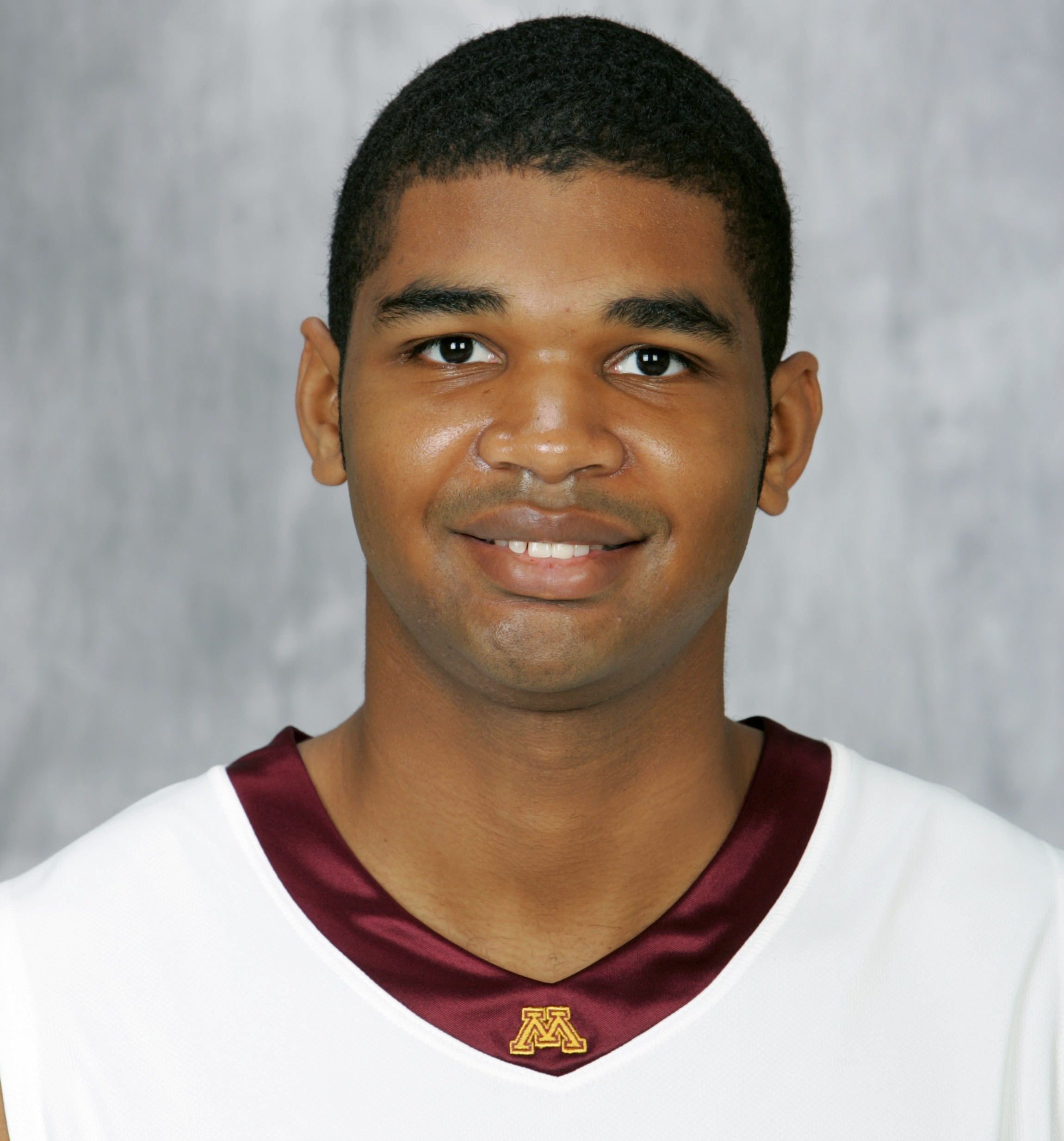
Ralph Sampson
College Baseball Needs to Rethink Scheduling
Big Ten Conference and other baseball programs at northern schools could be playing summer instead of spring schedules within five years. That’s the opinion of Gophers coach John Anderson who told Sports Headliners during an interview that economics and lack of parity with southern schools is frustrating to Big Ten and other coaches.
Like most college sports, baseball typically doesn’t even come close to paying its way and the nosedive of the American economy has added to the funding challenge. Northern schools sometimes are at an economic disadvantage against more prosperous southern baseball schools. Always there’s a competitive disadvantage because of weather. While southern schools can practice and play almost without concern about weather conditions, programs like Minnesota, or Michigan, have to fret over cold and precipitation even in May.
A better plan, Anderson suggests, is to have different schedules and college champions for southern and northern schools. Let southern schools keep the present schedule that begins in February and ends in June for those who can advance to the College World Series. Anderson talks about northern schools starting later and determining a champion in the summer.
Anderson said, “...I think people start looking at it and say, ‘Why are we spending this kind of money to try to compete in a sport, or in a championship climate, that you don’t have any hope? I think people are starting to look seriously at that. …”
Gophers athletic director Joel Maturi told Sports Headliners that the Minnesota baseball program operates at a deficit of about $900,000. He thinks a move toward an August-October schedule, one that coincides better with the academic year, could be the future for programs like Minnesota's.
Anderson’s team is on a Texas road trip that began last week and will cost about $45,000. It’s a classic example of the money and time northern schools must invest to strive for competitiveness. “We’ll be on the road for 10-11 days,” Anderson said. “We’re playing eight games in 10 days. It’s a grueling schedule. It taxes your pitching staff. You hope the weather cooperates so you can get it all in. That’s the unknown. You could have rain. What if you go down there and you only play half of your games? Is it really worth your while?”
Anderson mentioned that summer leagues in the north, like the Northwoods League with teams in Minnesota, Iowa and Wisconsin, use college players and are successful economic models for the Gophers and other Big Ten schools as they look at summer baseball. “Some of those owners are making close to a million dollars a summer,” he said.
Anderson said Big Ten programs are being stretched to spend the money to compete with the top baseball schools throughout the country, with heavy expenditures for travel and facilities. “Look at our program. We have three different facilities we play in, an outdoor facility on campus, we have an indoor football facility we practice in and we use the Metrodome,” Anderson said. “You’re constantly moving from one place to the other. You’re going on the road. You’re going into the Metrodome. You’re going outdoors. …”
Anderson said coaches don’t want to see more schools give up baseball, places like Northern Iowa which is calling it quits, with an opportunity to save $400,000 per year. Instead, he’s thinking about summer baseball with “lower overhead,” favorable weather and the possibility of more than doubling home attendance for his Gophers to 2,000 or more per game.

John Anderson
Weather keeps the Gopher baseball team on the move, both in Minneapolis, and on the road.

Joel Maturi
Worth Noting
Among the incentives in Tubby Smith’s contract is he receives $100,000 for coaching his Gophers into the NCAA tournament.
San Diego State senior forward Ryan Amoroso, from Burnsville High, scored 11 points and had 15 rebounds on Saturday when San Diego State lost 52-50 to Utah in the Mountain West Conference tournament championship game. The Aztecs were a "bubble" team that didn't receive an NCAA tournament invite.
North Dakota State’s Ben Woodside, who scored 60 points in a game earlier this season, broke the career scoring record at Albert Lea High School of his dad who topped the record held by his father, according to Ken Lien, the Minnesota Mr. Basketball chair who coached Woodside in AAU basketball. The Bison-Kansas game on Friday from the Metrodome is among the more anticipated first round NCAA tournament matchups.
Gophers football coach Tim Brewster has a website targeting potential recruits, www.play4brew.com. Rachel Lee, the daughter of WCCO Radio’s Dave Lee, talks about the program on the website. She is a student at Minnesota and intern in the football program.
Civic leader Denny Schulstad said fundraising for the veterans tribute area outside TCF Bank Stadium totaled $580,000, exceeding the goal of $460,000.
Frank Stallone, Sylvester’s brother, has been added to the celebrity lineup for the Amyotrophic Lateral Sclerosis (ALS) and Scott LeDoux benefit event on Friday, April 10 at Champions Event Center in Elko. Stallone, a former boxer, will perform songs from the Rocky movie series including “Far from Over” and “Take You Back.” Performers will also include 1980’s rock entertainers Jimi Jamison, formerly of Survivor, Alex Ligertwood, former lead for Santana, and Fergie Frederiksen, former lead of Toto.
Tickets are $15 in advance. More information is available at www.headlinersinc.net. LeDoux, one of the most prominent Minnesota boxers ever, announced in recent months that he has ALS. His friend Mike Woodley is an event organizer and has produced a LeDoux video airing on YouTube,
http://www.youtube.com/watch?v=VWWomRDi8LcThe Minnesota Minute Men announced yesterday that Nick Leddy from Eden Prairie High won the 25th Annual Mr. Hockey Award, given to the outstanding senior boys high school hockey player in the state. Casey O’Connor of Bloomington Jefferson High School received The Frank Brimsek Award, in recognition of Minnesota’s top senior goaltender. Jeff Poeschl (Mahtomedi High School) and Lee Smith (Eden Prairie) won The John Mariucci Award, given to the Class A and Class AA high school coaches of the year. Tom Saterdalen of Jefferson received The Cliff Thompson Award, presented to the “Old Timer Coach” of the year.

Ken Lien
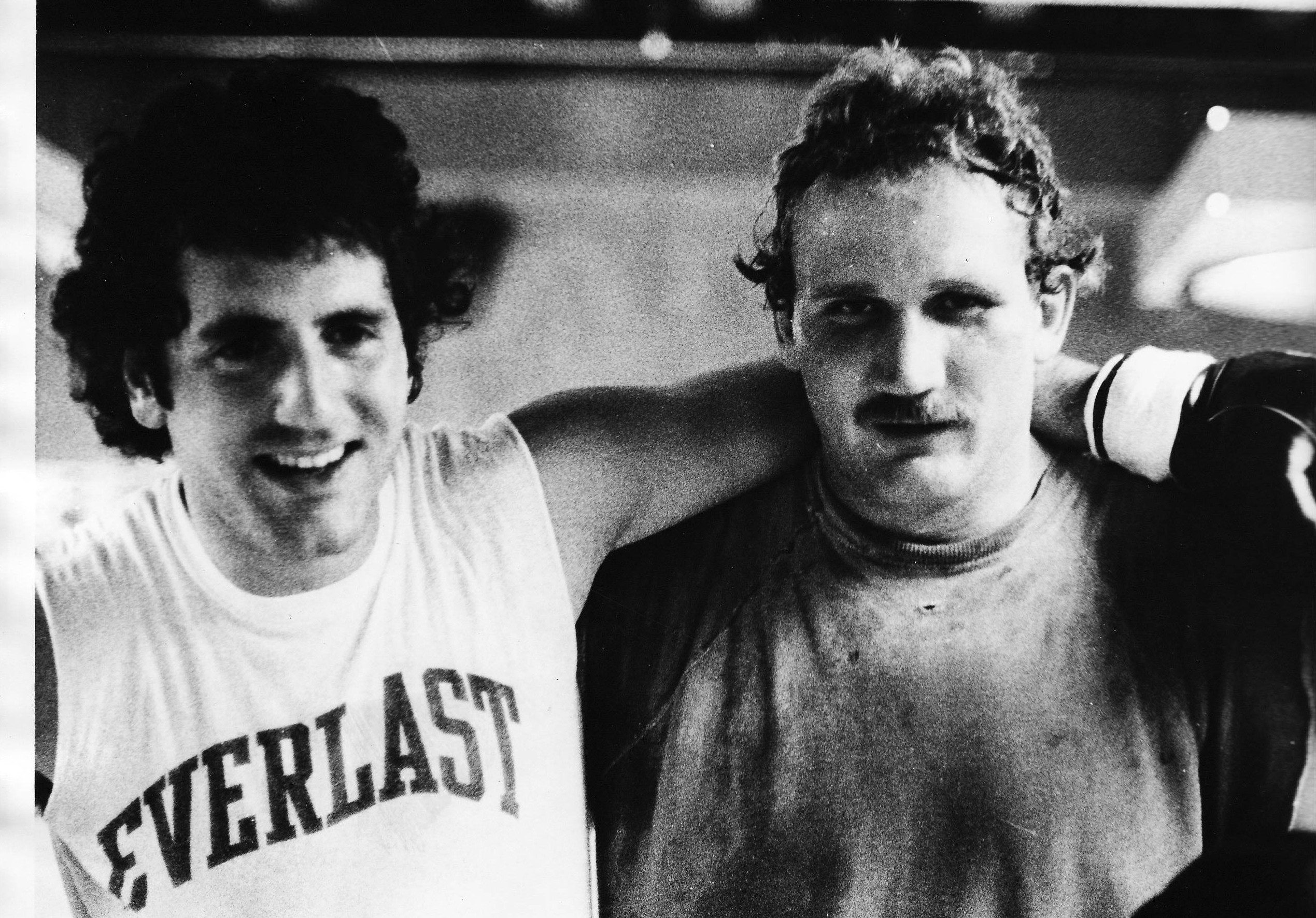
Frank Stallone & Scott LeDoux
